
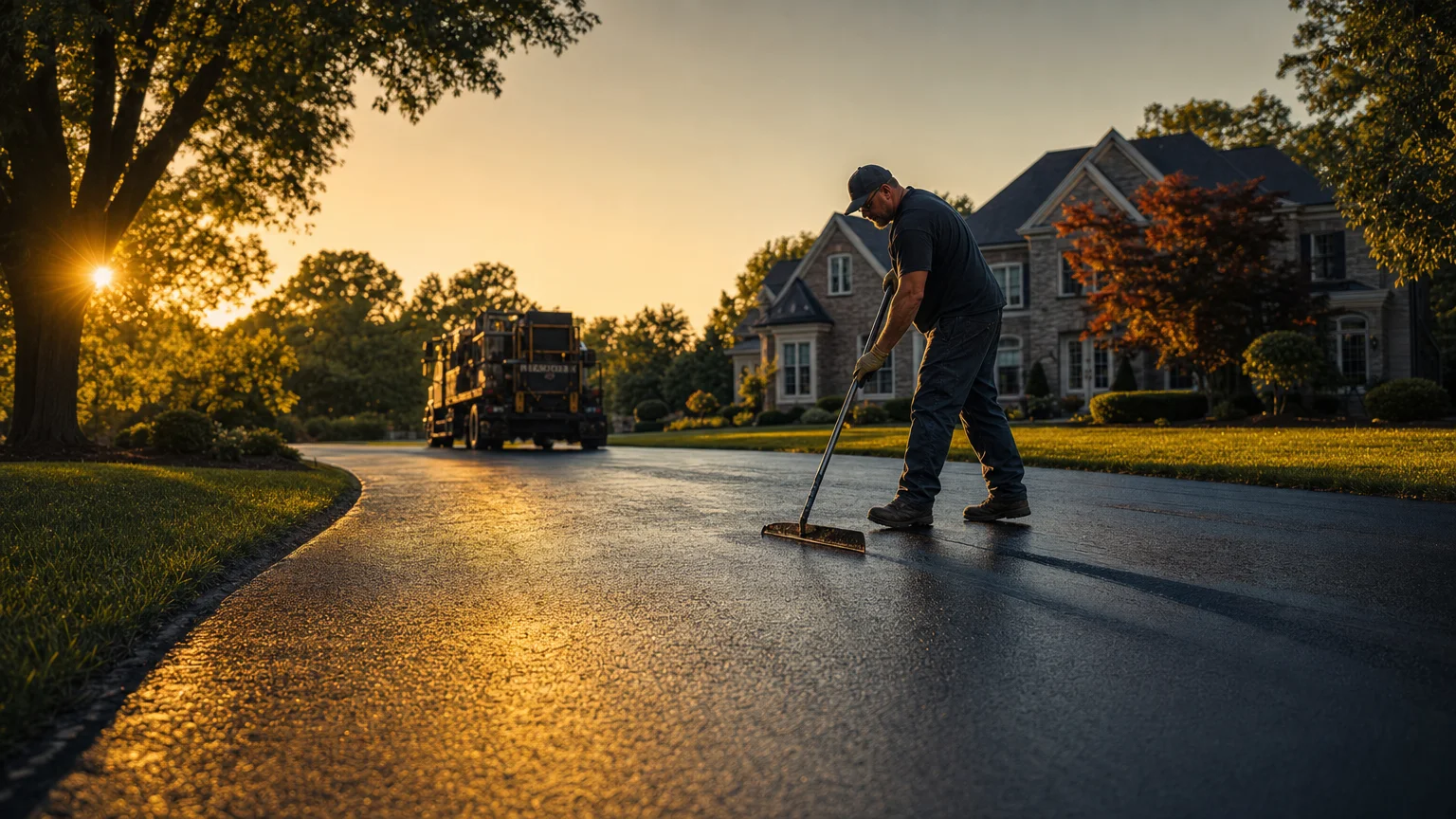
Asphalt Sealcoating in Louisville, Kentucky — Protect Your Pavement Before Winter Does the Damage
Asphalt sealcoating is one of the most cost-effective ways to extend the life of an existing asphalt surface. Paving Company Louisville KY applies commercial-grade sealer to driveways and parking lots throughout Louisville and Jefferson County, helping property owners get more years out of pavement they’ve already invested in. If your asphalt is fading, showing early surface cracks, or hasn’t been sealed in several years, a sealcoating service can slow further deterioration before it becomes a more expensive repair.
What Is Asphalt Sealcoating?
Asphalt sealcoating is the application of a liquid protective coating over an existing asphalt surface to shield it from water, UV rays, vehicle fluids, and the expansion-and-contraction stress caused by temperature changes. The sealer fills minor surface voids, restores a uniform dark color, and creates a barrier that slows the oxidation process that makes asphalt brittle over time.
Sealcoating is a maintenance service, not a repair. It works best on asphalt that is structurally sound — meaning no significant potholes, base failures, or large cracks. Surfaces with serious damage should have those issues addressed through Asphalt Repair first, then sealcoated once the surface is stable.
Homeowners with asphalt driveways, property managers, and commercial property owners with parking lots are the most common candidates. If your pavement is in reasonable condition and you want to protect that investment, sealcoating is the appropriate next step. Learn more about the full range of pavement services we offer on our services page.
How is sealcoating different from asphalt resurfacing?
Sealcoating applies a thin liquid coating on top of existing asphalt — it does not add structural thickness. Asphalt Overlay & Resurfacing installs a new layer of asphalt over the existing surface to address more significant wear, roughness, or minor base issues. Sealcoating is a preventive maintenance step; resurfacing is a corrective one. Choosing the right service depends on the current condition of your pavement, which is why we assess the surface before recommending anything.
Does sealcoating work on all types of asphalt surfaces?
Sealcoating is appropriate for most standard hot-mix asphalt driveways and parking lots that are structurally intact. It is not suitable for concrete, chip-seal, or gravel surfaces, and it should not be applied over asphalt that has significant base failure, alligator cracking, or standing water issues — those conditions require structural repair first. During our site evaluation, we identify whether sealcoating is the right fit or whether other work needs to happen first.
How does Louisville’s climate affect asphalt without sealcoating?
Louisville experiences genuine freeze-thaw cycling through winter and early spring — temperatures regularly cross the freezing threshold multiple times in a single week. Water that enters unsealed asphalt through surface voids expands when it freezes, widening cracks and accelerating surface breakdown. UV exposure during summer months oxidizes the asphalt binder, making it brittle. Sealcoating addresses both vulnerabilities by reducing water infiltration and slowing UV degradation. You can read more about how Louisville’s climate affects pavement on our blog.
Signs You Need Asphalt Sealcoating
Your asphalt is ready for sealcoating when you can observe any of the following conditions. Catching these signs early — before they progress to structural damage — is when sealcoating delivers the most value.
- Faded gray or brown color: Fresh asphalt is deep black. When the surface turns gray, the binder is oxidizing and the asphalt is becoming more brittle — a sealer restores the protective layer.
- Fine surface cracks (hairline or map cracking): Small, shallow cracks that haven’t yet spread to the base indicate early surface oxidation that sealcoating can slow.
- Rough or raveling texture: If the surface feels loose or granular underfoot and small aggregate is detaching, the binder is breaking down and a sealer can help stabilize what remains.
- Water no longer beads on the surface: Properly sealed asphalt sheds water. If water soaks in rather than running off, the existing sealer has worn through.
- It’s been three or more years since the last sealcoating: Even asphalt that looks acceptable loses sealer effectiveness over time; routine reapplication on schedule is more efficient than waiting for visible damage.
- Light surface staining from vehicle fluids: Petroleum-based fluids soften asphalt binder. A fresh sealer coat provides a barrier that makes the surface easier to maintain.
- You’re heading into a Louisville winter with exposed asphalt: Fall is the optimal time to seal before freeze-thaw cycles begin — sealing in spring after winter damage is reactive; sealing before winter is preventive.
How Much Does Asphalt Sealcoating Cost in Louisville, Kentucky?
Sealcoating pricing in Louisville is not flat-rate — the cost of your job depends on the size of the area, the current condition of the surface, the amount of prep work required, and the number of coats needed. Every job gets an on-site estimate so you know exactly what you’re paying for before work begins. Get a free quote to start the process.
The table below illustrates the factors that drive price variation. No specific dollar figures are listed because conditions vary significantly between properties — the only accurate number is the one we give you after seeing your surface.
| Service / Situation | Typical Range | What Affects Price |
|---|---|---|
| Residential driveway sealcoating | On-site estimate required | Square footage, surface condition, crack prep needed |
| Commercial parking lot sealcoating | On-site estimate required | Total area, traffic lane striping needs, repair work required first |
| Sealcoating after prior crack repair | On-site estimate required | Extent of repairs completed, number of coats, cure time requirements |
| Reapplication (maintained surface) | On-site estimate required | Time since last seal, current surface condition, accessibility |
What’s included in our sealcoating service:
- On-site surface evaluation
- Surface cleaning and edge preparation
- Crack and surface prep as needed prior to sealer application
- Commercial-grade sealer application
- Curing period guidance
- Walkthrough of finished work with the customer
What may not be included:
- Structural asphalt repair (addressed separately as Asphalt Repair if needed)
- Line striping or parking lot marking (discuss at time of estimate if needed)
- Work outside the agreed scope — any additions are confirmed with you before proceeding
Is asphalt sealcoating covered by homeowner’s insurance?
Routine maintenance services like sealcoating are generally not covered by homeowner’s insurance policies, which typically apply to sudden, accidental damage rather than wear-and-tear or preventive upkeep. If your asphalt was damaged by a covered event — such as a fallen tree — a portion of repair costs might be claimable, but sealcoating itself is a maintenance expense. Check your specific policy or speak with your insurance provider for clarity on your coverage.
How long does asphalt sealcoating take to complete?
Most residential driveways can be sealcoated in a few hours on the day of application. Larger commercial parking lots take longer depending on total square footage and the number of coats being applied. The more significant time commitment for you as the property owner is the curing window — plan to keep vehicles off the surface for at least 24 to 48 hours after application, and longer in cooler or humid conditions.
Can I sealcoat my own driveway instead of hiring a contractor?
Consumer-grade sealers are available at hardware stores, but they are typically more diluted than commercial products and require proper surface prep, mixing, and application technique to bond correctly. Improper application — including sealing over dirty surfaces, applying in wrong temperatures, or using too thin a coat — can result in peeling, streaking, or premature failure. A professional application uses commercial-grade material and proper prep, which affects how long the seal lasts and how evenly it performs.
Why Choose Paving Company Louisville KY?
Paving Company Louisville KY focuses specifically on asphalt work — driveways, parking lots, repairs, and maintenance — for homeowners and commercial property owners throughout Louisville and Jefferson County. That focus means the team working on your sealcoating job understands asphalt surfaces, not a generalist crew that handles sealcoating as an afterthought.
- Louisville-specific experience: Our work is in Louisville’s climate — we understand how freeze-thaw cycles affect asphalt and how to time sealcoating to maximize protection before winter.
- Honest scope before work begins: We confirm exactly what’s included — surface area, prep work, number of coats — before any work starts. No surprises on the invoice.
- On-site estimates, not phone guesses: Asphalt conditions vary too much for accurate remote pricing. We evaluate your surface in person so the quote reflects your actual job.
- Prep work is not skipped: Sealcoating over a dirty, cracked, or unstable surface fails prematurely. We clean and prep the surface properly because the sealer is only as good as what it’s bonding to.
- Residential and commercial capability: Whether it’s a single-car driveway or a multi-bay commercial parking lot, we handle both — and we understand the scheduling constraints commercial properties have.
Learn more about our team and how we approach paving work on the about Paving Company Louisville KY page.
Book Your Asphalt Sealcoating in Louisville, Kentucky
Sealcoating is most effective when it’s applied to asphalt that’s still in sound condition — before surface damage progresses to structural repair. If your driveway or parking lot is showing early signs of wear, or if it’s simply been a few years since the last application, now is the right time to schedule an evaluation.
Paving Company Louisville KY provides on-site estimates for sealcoating jobs throughout Louisville and Jefferson County. We assess your surface, confirm the scope and what’s included, and give you a clear number before any work begins.
To schedule your estimate:
- Call us: +1 (502) 206-8542
- Use our contact form: Get a free quote
After you reach out, we’ll schedule an on-site visit at a time that works for you. We’ll evaluate the surface, discuss any prep work needed, and provide a written estimate covering exactly what’s included. You decide whether to move forward — no pressure, no obligation.
Last updated: September 2026
Areas We Serve
Frequently Asked Questions
How long does asphalt sealcoating last in Louisville, Kentucky?
In Louisville's climate, a properly applied sealcoat typically lasts two to four years before reapplication is needed. Freeze-thaw cycles, UV exposure, and traffic volume all affect how quickly the sealer wears. Driveways in good underlying condition that are sealed on a regular schedule tend to stay protected longer than surfaces sealed reactively after visible damage has already appeared.
Can asphalt be sealcoated if it already has cracks?
Minor surface cracks should be cleaned and filled before sealcoating — sealer alone does not repair structural cracks. If cracks are left untreated, water can still penetrate beneath the sealer and worsen the damage over time. We assess crack severity during the site evaluation and recommend the appropriate prep work before any sealer is applied.
How soon after new asphalt is paved can it be sealcoated?
Newly installed asphalt generally needs to cure for at least 90 days — and often six months to a full year — before sealcoating is appropriate. Sealing too early traps oils in the asphalt that need time to off-gas, which can prevent the surface from hardening correctly. We'll advise on the right timing based on when your asphalt was installed and current weather conditions at the time of your estimate.
How long do I need to stay off the driveway after sealcoating?
Plan to keep vehicles and foot traffic off the sealed surface for at least 24 to 48 hours after application. Curing time varies with temperature, humidity, and the number of coats applied — cooler or humid days extend the window. We'll give you a specific curing estimate at the time of the job based on the forecast and conditions.
Does sealcoating fix potholes or large damaged areas?
Sealcoating is a protective coating, not a structural repair — it does not fill potholes, deep ruts, or significantly damaged sections. Those areas require Asphalt Repair before a sealer can be applied effectively. We identify any repair needs during the site evaluation so you know exactly what work is recommended before sealcoating proceeds.
How often should a commercial parking lot be sealcoated?
Commercial parking lots typically benefit from sealcoating every two to three years, depending on traffic volume and sun exposure. High-traffic areas near entrances and main drive lanes wear faster than low-use sections of the lot. An on-site evaluation helps determine whether the entire lot or specific zones need priority attention.
What weather conditions are needed for sealcoating in Louisville?
Sealcoating requires dry conditions and surface temperatures above 50°F — both during application and for the curing period that follows. Louisville's spring and fall windows can be unpredictable, so scheduling with some forecast flexibility matters. We will not apply sealer in conditions that would compromise adhesion or curing, and we'll communicate proactively if a scheduled job needs to be rescheduled due to weather.